
In an era dominated by sprawling luxury conglomerates and corporate standardization, independent, family-owned Swiss watchmakers represent a rare and romantic breed. Geneva’s Raymond Weil stands out among this select circle. Marking its 50th Anniversary on 1 October 2026, the Maison celebrates half a century anchored by three generations of family leadership, an intrinsic passion for music and the fine arts, and a steadfast dedication to making refined Swiss horology accessible at fair prices.
A Symphony in Three Movements
Founded in 1976 by Mr. Raymond Weil at age 50—right in the throes of the global quartz crisis—the Maison refused to capitulate to the turbulent economic tide. Weil built his namesake brand on human values, personal warmth, and his passions for aviation, art, and music, steering it from an upstart workshop into an internationally celebrated name across the Americas, the United Kingdom, and the Middle East.
The brand’s evolution mirrors a classical three-part symphony:
- 1st Movement – The Founding Spirit (1976): Mr. Raymond Weil establishes the brand’s guiding ethos: delivering elegant, high-grade Swiss watchmaking with a personal, accessible touch.
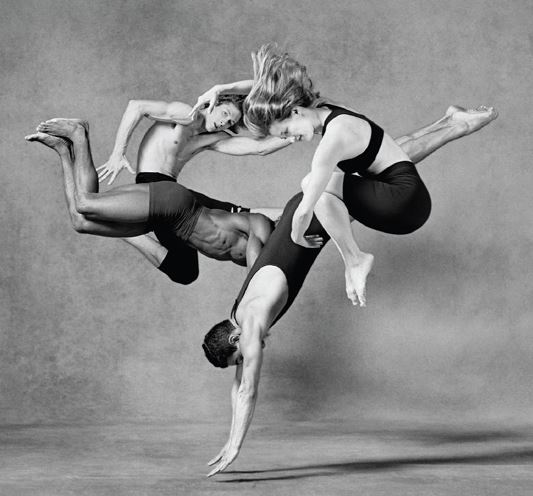
- 2nd Movement – Global Expansion & Technical Mastery (1982–2006): Under son-in-law Olivier Bernheim, the Maison expanded its worldwide footprint and established robust in-house technical capabilities. A pioneer of vertical integration, Raymond Weil made history in 1999 as the first Swiss watchmaker to adopt 3D printing technology for rapid prototyping. This era also produced the award-winning 1994 “Precision Movements” campaign shot by photographer Loïs Greenfield, capturing dancers in suspended flight and linking the brand to physical elegance—a visual legacy revisited in 2026 for the 50th jubilee.
- 3rd Movement – A 21st-Century Vision (2006–Present): Led since 2014 by Chief Executive Officer Elie Bernheim (grandson of the founder), the brand has blended modern horological credentials with founding traditions. Under his tenure, Raymond Weil unveiled its first in-house proprietary movement (the skeletonized RW1212 calibre) in 2017, made its formal debut at Watches & Wonders in 2024, launched the Toccata Heritage in 2025, and took home the Grand Prix d’Horlogerie de Genève (GPHG) “Challenge” prize in 2023 for its vintage-inspired Millésime line.
When Horology Meets Melody
Unlike brands that dabble casually in lifestyle sponsorships, Raymond Weil treats music as its primary creative wellspring. Its classic catalogs read like an operatic playbill, featuring collections named after immortal works such as Amadeus (1983), Fidelio (1985), Othello (1986), Parsifal (1990), and Nabucco (2007).
Over the decades, that classical foundation broadened to capture the pulse of modern music and pop culture. Notable limited editions have paid tribute to icons and institutions including Frank Sinatra, The Beatles, David Bowie, Jimi Hendrix, AC/DC, Gibson guitars, and Marshall Amplification, as well as cultural touchstones like Jean-Michel Basquiat and Largo Winch.
Looking to the Future: The Legacy Tour
To commemorate this milestone, Raymond Weil has unveiled an immersive legacy exhibition featuring a chronological history wall and rarely seen archival museum pieces. The retrospective places historic models from the brand’s formative years in direct dialogue with its contemporary vanguard, including the acclaimed Millésime collection.
As Elie Bernheim reflects, the brand’s independence remains its greatest asset: “We answer only to ourselves, and make decisions with the long view in mind. Our sole ambition is to create exceptional timepieces at accessible price points. It is this steadfast vision and coherence that give us our strength.”
| 1976 Vintage | The Vintage category brings together all the timepieces designed by Mr Raymond Weil before the launch of Amadeus. Their distinctive shapes – oval, square, cushion, elliptical, and more – are deceptively unconventional, and retain an enduring allure. |
| 1978 Golden Eagle | With its octagonal case and integrated bracelet that defied the conventions of the time, the Golden Eagle heralded the design ethos that would come to define RAYMOND WEIL. |
| 1983 Amadeus | Taking its name from Peter Shaffer’s celebrated play on Mozart’s life, Amadeus was the brand’s first watch to be christened with a name. It was worn by the cast of Milos Forman’s eponymous film during their worldwide promotional tour, introducing the RAYMOND WEIL name to audiences across the world. |
| 1986 Fidelio | This collection, inspired by Beethoven’s opera, explores the theme of the refined, elegant, and precious dress watch. Feminine in design and driven by quartz movements, the Fidelio line is distinguished by its superbly integrated, supple, and comfortable bracelets, elevating each watch to the status of a jewel. |
| 1986 Othello | Othello ushers in a new era for RAYMOND WEIL. With its avant-garde design and smoked metallic glass, this ultra-slim timepiece driven by a 1.3 mm movement grained international recognition. |
| 1988 Traviata | The Traviata collection captures the essence of RAYMOND WEIL’s daring design philosophy and independent spirit. Striking and playful, it defies traditional constraints with dials featuring a metal bar or tuning fork, bi coloured or gem-set surfaces, and a steel bracelet. |
| 1990 Parsifal | Guided by the inspiration of Wagner’s opera, the Parsifal collection held a leading position in RAYMOND WEIL’S catalogue for more than two decades. Signature details include smooth, rounded lines, a fluted bezel, and a distinctive steel and 18-carat gold bracelet, with cross-shaped links that are inseparable from the model. Parsifal’s timelessness, elegance and accessibility make it a true expression of RAYMOND WEIL’s vision. |
| 2002 Don Giovanni «Cosi Grande» | Combining horological savor-faire with bold design, this collection of rectangular watches exemplifies RAYMOND WEIL’s ethos. The Don Giovanni Cosi Grande “Heure Sautante” captivates with a unique ‘jumping-hour’ display and a contemporary silver-and-black dial. |
| 2005 Shine | This ultra-feminine, elegant and versatile watch introduces a pioneering feature: RAYMOND WEIL’s patented interchangeable bracelet system, a feature that would later sweep the market. As a rectangular diamond-set jewellery watch on a chain-link bracelet, it is a cuff watch that exudes both glamour and contemporary edge. |
| 2007 Nabucco | Drawing inspiration from Verdi’s iconic opera, this watch balances architectural form with elegance and strength, reflecting the vision of the Maison’s third generation. Its bold style heralded a fresh chapter for RAYMOND WEIL collections, introducing innovative materials such as ceramic, titanium, and carbon. As the brand’s most sporty line, it encompassed three-hand watches, chronographs, and GMT models. |
| 2007 Freelancer | RAYMOND WEIL’s bestselling freelancer is the brand’s first watch not to bear a music-inspired name.Instead, its title highlights another defining trait of the Maison: independence. It is available in a variety of styles, from elegant to sporty to contemporary to classic. The collection’s centrepiece, the freelancer RW1212, was the unveiling of the Maison’s first automatic calibre designed like a tourbil-Ion, with its balance wheel positioned at 6 o’clock. The freelancer complete calendar, introduced in 2025, offers enthusiasts an iconic horological complication at an accessible price point. |
| 2010 Maestro | This automatic collection, whose name literally translates as “master”, embodies all the codes of classical watchmaking, demonstrating RAYMOND WEIL’S horological mastery. From Roman numerals and guilloché dials to perlage, moon phases, and skeletonised faces, each detail is meticulously executed. The line also hosts tribute and collector editions dedicated to the Beatles and Frank Sinatra. |
| 2023 Millesime | The miliesime captivated both professionals and the public with its neo-vintage design and exceptional watchmaking finishes for its price range, earning it the Grand Prix d’Horlogerie de Geneve in 2023 in the Challenge” category (watches under CHF 2,000), It marked a new chapter in RAYMOND WEIL’s history, re-affirming the brand’s historic equation of design, quality, and value, winning over collectors worldwide and attracting a new audience in markets such as Japan and France. |
| 2025 Toccata Heritage | When it was unveiled at Watches & Wonders in 2025, the toccata made an immediate impression. Drawing inspiration from a watch worn by Mr Raymond Weil in 1990, this ultra-slim timepiece features an elliptical case and clean, elegant lines, with sunburst silver or copper dials. Designed for both traditionalists and modern watch lovers, it comes with either a manual-winding mechanical movement or a quartz option. |

