
THE RIVERFRONT RENAISSANCE
How a Historic Shipping Channel Transformed into Singapore’s Premier Corridor of Luxury, Cutting-Edge Design, and Radical Sustainability
The Singapore River has long served as the lifeblood of the nation, flowing from its historic source down to the shimmering expanse of Marina Bay. For over a century, its banks at Robertson Quay and Havelock Road hummed with the industrial clatter of cargo-laden bumboats, spice warehouses, and mercantile trade. Today, this historic waterfront has undergone an extraordinary metamorphosis. It has evolved into a sophisticated enclave where the echoes of Singapore’s commercial founding seamlessly blend with avant-garde architecture, high-concept lifestyle hospitality, and pioneering environmental stewardship.
At the heart of this urban renaissance stands a collection of landmark hospitality properties managed under Millennium Hotels and Resorts and City Developments Limited (CDL). Together, these properties—Copthorne King’s Hotel Singapore, Grand Copthorne Waterfront Hotel, Studio M Hotel, and M Social Singapore—tell a compelling story of architectural transformation and visionary hospitality.
To walk the modern riverfront pathway is to witness an architectural dialogue across decades. The linear progression from the nostalgic, heritage-rich corridors of Havelock Road to the high-design concept spaces of Robertson Quay showcases how hospitality has adapted to the changing desires of global travelers. No longer are hotels merely places to rest; they have become fully immersive narrative environments, dining destinations, and proofs of concept for sustainable urban architecture. From the foundational corporate legacy of Copthorne King’s Hotel to the soaring, eco-luxury heights of Grand Copthorne Waterfront, and down to the design-forward aesthetic statements of Studio M and M Social, the riverfront precinct provides an unparalleled study in modern luxury lifestyle hospitality.
1. The Matriarch of Havelock Road: Copthorne King’s Hotel Singapore
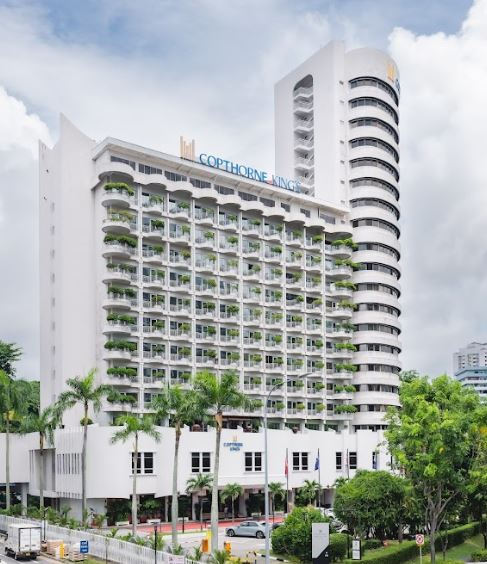
The historical lineage of this riverfront hospitality boom traces its definitive roots back to October 1970 with the opening of King’s Hotel. Built on a historic plot acquired during Singapore’s very first hotel land sale in 1967, the property was the direct brainchild of City Developments Limited’s Executive Chairman, Mr. Kwek Leng Beng. Affectionately revered across the industry as the “mother of all CDL hotels,” King’s Hotel was a brave architectural step into the future for a young, developing nation. Initially standing as a 12-storey building housing 175 rooms, the hotel grew alongside Singapore’s economic rise, adding a distinctive cylindrical tower block in the early 1980s that culminated in a 20-storey annex expanding its capacity to 319 keys.
In 1998, a monumental corporate transition occurred when CDL Hotels acquired the international Copthorne chain. The property was rebranded as Copthorne King’s Hotel Singapore, establishing the anchor and starting point of a global hospitality journey that has since expanded to encompass more than 160 hotels worldwide under the Millennium Hotels and Resorts banner. Today, this welcoming 4-star hotel stands elegantly along a quiet stretch of Havelock Road, masterfully balancing historical nostalgia with the demanding luxuries of modern travel. It offers 311 carefully designed guest rooms and suites tailored to work trips, holidays, and short breaks alike.
The defining quality of Copthorne King’s Hotel is its remarkable ability to honor its heritage while executing continuous, high-end updates. A major turning point occurred in 2020, when 142 rooms in the Tower Wing were comprehensively refurbished with a stylish, Chinoiserie-inspired interior and updated in-room technology. Designers introduced a refined, contemporary stay experience where modern comfort is paired with soft, calming tones and polished residential details. The Tower Wing now offers distinct, high-character choices: the Signature Rooms provide a well-appointed, understated modern space, while the expansive Signature Studio Rooms offer additional space and character tailored for premium bookings and long-term business guests.
Technology also plays a key role in the guest experience. Every guestroom features integrated Aiello Voice Assistant (AVA) technology. This AI-powered device allows guests to control room settings, request bespoke concierge services, and access real-time hotel data via intuitive vocal commands. Beyond its rooms, the hotel features an outdoor pool surrounded by greenery, a jacuzzi, a well-equipped gym, a sauna, a steam bath, a mini-golf putting green, and a 24-hour self-serve launderette.
Beyond its guestrooms, Copthorne King’s Hotel is a certified culinary powerhouse that preserves Singapore’s rich food heritage. Its crown jewel restaurant, Princess Terrace, has served an authentic Penang buffet since 1970. Dedicated to time-honored recipes, nostalgic family-style dining, and traditional cooking methods, Princess Terrace was officially recognized as the Singapore Tatler Best Spotlight Restaurant 2026, underscoring the property’s unmatched strength in food and beverage alongside its heritage credentials. Complementing this is Tien Court, an institutional dining room established in 1989 that specializes in authentic Teochew cuisine, handcrafted dim sum, and private dining. Combined with the lively Connections Lounge for live music and bar experiences, the hotel remains a major social hub for the local community.
Architectural & Culinary Refurbishment Spotlight
Between March 7 and April 23, 2026, Princess Terrace underwent a meticulous S$150,000 architectural refurbishment. Moving temporary operations to the Queen Room during this period, artisans installed premium new floor finishes and upgraded buffet counters fitted with state-of-the-art induction plates. Reopening on April 24, 2026, the restaurant debuted an enhanced dining environment alongside a spectacular Live BBQ Seafood and Penang Buffet Feast.
2. The Vanguard of Sustainable Luxury: Grand Copthorne Waterfront Hotel
As the river weaves closer to the urban center, the scale shifts dramatically at the Grand Copthorne Waterfront Hotel Singapore. Opened in 1999 as a premium riverside business and leisure destination, this 30-storey tower occupies a prime waterfront position bridging the Central Business District, Orchard Road, and Robertson Quay. Between 2022 and 2023, management embarked on a massive, nine-month renovation costing approximately S$40 million. This sweeping capital injection refreshed guestrooms, public common areas, and MICE (Meetings, Incentives, Conferences, and Exhibitions) facilities, completely repositioning the property as a modern sustainable luxury hotel designed for the modern era.
Architecturally, the Grand Copthorne Waterfront utilizes its prime riverfront position to full advantage, with many rooms and public areas designed to maximize panoramic river and city skyline views. The tower’s design incorporates floor-to-ceiling glass windows that flood the building with natural light. Upon arrival, guests enter a dramatic high-ceiling lobby featuring massive structural pillars, premium marble finishes, and floating, cloud-like sculptural lighting installations that create an immersive arrival experience. This space was reimagined to serve as a multi-functional social hub, connecting the reception, executive lounges, fine-dining restaurants, and outdoor river walkways into a single fluid, flow-oriented environment.
Today, the hotel is celebrated as one of Singapore’s premier conference venues, boasting more than 6,200 square meters of flexible event space spread across 33 function rooms. These spaces are equipped with cutting-edge event technology, including high-definition laser projection, massive LED video walls, and wireless signal transmission systems. Crucially, these rooms are engineered to capture natural daylight, reducing energy use and creating a more comfortable environment for multi-day conferences and weddings.
The hotel seamlessly supports large corporate gatherings while offering an intimate, wellness-focused sanctuary for leisure guests. Notable lifestyle and wellness amenities include an outdoor swimming pool and jacuzzi surrounded by lush landscaping, a 24-hour fitness center, a specialized J’s Salon, an on-site padel court, and direct access to riverside jogging and walking paths.
The guest experience at Grand Copthorne Waterfront is defined by efficiency, luxury, and thoughtful hospitality. Touchpoints include streamlined check-in and check-out procedures, a dedicated concierge team, and the exclusive Executive Club Lounge. Families are welcomed with curated experiential stays, including specialized family suites and themed packages. Demonstrating a family-first philosophy, children aged five and under stay and dine entirely for free.
Gastronomy is another major pillar of the hotel’s identity, making it a dining destination in its own right. Its signature outlets include Food Capital, a luxury international buffet space, and SanSara, which has been recognized by Tatler Asia as one of Singapore’s top Indian restaurants. The hotel also offers experiential afternoon tea services that overlook the historic river view.
3. The Architectural Avant-Garde of Robertson Quay: Studio M Hotel
Further down the river, the visual language changes from traditional luxury to bold architectural experimentation. Opened in 2010, Studio M Hotel carved its name into history as Singapore’s very first fully loft-inspired lifestyle property, introducing a fresh, modern take on lifestyle hospitality. Designed by the internationally acclaimed Italian architect and designer Piero Lissoni, the hotel rejected standard room layouts in favor of vertical spatial design. Strategically located in the lively Robertson Quay district, Studio M targets modern business travelers, creative professionals, and leisure tourists seeking a stylish, centrally located urban retreat that breaks away from traditional design templates.
Lissoni’s architectural vision centers on clean, minimalist lines, high ceilings, and split-level layouts that maximize spatial efficiency and comfort. The property features 360 thoughtfully engineered loft rooms where large bay windows invite abundant natural light and frame beautiful views of the city. By separating the workspace and living lounge on the lower level from the sleeping area on the upper mezzanine, Studio M creates a feeling of urban sophistication and comfort that differs significantly from traditional hotel rooms. Select premium room categories also feature private balconies or open-air rooftop patios, adding a welcome outdoor dimension to the inner-city hotel stay.
The guest experience at Studio M is divided into five distinct loft room categories, each tailored to different travel styles and preferences. Solo business travelers and couples gravitate toward the sleek efficiency of the Urban Lofts. Families find comfort in the specialized Family Loft rooms, which comfortably accommodate up to four guests without sacrificing privacy or style. For those seeking an elevated city experience, the Moonlight Loft Rooms offer beautiful private balconies that allow guests to enjoy the city night lights right from their room. This design-led approach creates a vibrant, social atmosphere that makes the hotel a standout landmark along the riverfront.
4. The Theatrical Living Space: M Social Singapore
In June 2016, the riverfront witnessed another major design milestone with the launch of M Social Singapore. Serving as the global debut property for the M Social brand worldwide, this hotel introduced a bold lifestyle concept focused on social connection, expressive design, and integrated technology. Located at Robertson Quay and conceptualized by the celebrated French designer Philippe Starck, the property was envisioned as an immersive, “theatrical living space.” Filled with creative design elements, expressive textures, and immersive corners throughout the property, M Social caters directly to modern travelers who value community, design, and tech-driven experiences.
Starck’s design for M Social relies on dramatic architectural details, custom ambient lighting, and high-contrast contemporary finishes that create a bold yet cozy environment. The hotel features a mix of experiential room concepts, most notably its iconic Alcove and Loft rooms. The signature Alcove rooms are famous for their unique pitched ceilings and cozy, cocoon-like geometry, balancing comfort with a clean, minimalist aesthetic. The Contemporary Loft rooms focus on vertical space and dynamic lines, while the Terrace room categories provide added privacy and direct access to outdoor terrace spaces. Unique architecture, smart room features, and vibrant social spaces combine to create a lifestyle experience that goes beyond a traditional hotel stay.
The social heartbeat of M Social is Beast & Butterflies, the hotel’s signature dining destination. Located right along the riverside, this restaurant serves modern East-meets-West fusion cuisine within a highly stylized space. It features interactive design elements and eclectic interior decor designed to spark conversation. Positioned near Robertson Quay’s popular riverside dining and nightlife hubs, M Social bridges the gap between private accommodation and public social spaces, making it highly attractive to guests seeking a creative, social, and distinctly urban stay.
5. A United Green Frontier: The Radical Shift to Eco-Hospitality
While architectural design and culinary excellence define the public face of these four riverfront properties, their true shared triumph lies in a deep commitment to environmental sustainability. Aligned with the Singapore Hotel Sustainability Roadmap established by the Singapore Tourism Board and the Singapore Hotel Association, these hotels have implemented green practices across their operations. This shift reflects a portfolio-wide belief that modern luxury and ecological responsibility must go hand in hand.
At Copthorne King’s Hotel, this commitment is backed by major green accolades. The property has achieved Global Sustainable Tourism Council (GSTC) certification, recognizing its high standards of environmental stewardship and eco-friendly initiatives. Furthermore, the hotel was awarded the prestigious BCA Green Mark Platinum 2026 certification, reflecting outstanding performance in sustainable building design and operations. Single-use plastic straws have been eliminated across the property and replaced with more sustainable alternatives. In line with a group-wide mandate by Millennium Hotels and Resorts, shark’s fin has been completely removed from all dining menus. Additionally, the hotel car park facilities include advanced Electric Vehicle (EV) charging stations to support eco-conscious transportation.
Similarly, the Grand Copthorne Waterfront Hotel incorporated radical sustainability measures directly into its recent S$40 million renovation. The hotel replaced all single-use plastic bottles with integrated, in-room filtered drinking water systems and swapped out individual plastic bottles for refillable bath amenities. The building’s energy footprint was reduced through the installation of smart, energy-efficient LED lighting, advanced water-saving systems, and carpets and wall coverings made from recycled materials.
The hotel holds the Singapore BCA Green Mark certification and has achieved ISO 14001 certification, demonstrating alignment with global sustainability priorities including Climate Action, Responsible Consumption and Production, and Clean Water and Sanitation. This translates directly into active initiatives for reducing waste and pollution, improving resource efficiency, and managing environmental risks.
The hotel’s green philosophy extends to its event spaces and dining as well. Restaurants support sustainable dining with menus featuring locally sourced, organic, and responsibly harvested ingredients, utilizing a farm-to-table approach to reduce food miles while improving freshness. Conference and event operations utilize eco-conscious practices such as linen-less table setups, recyclable stationery, and layouts designed to maximize natural daylight.
The property is certified GOLD (Venue & F&B) by SACEOS under the Singapore MICE Sustainability Certification. Looking to the future, Grand Copthorne Waterfront has set clear green targets: it is actively working toward Green Globe Certification by July 2026, followed by the GSTC MICE Sustainability Certification for Venues by November 2026.
Urban Agriculture Spotlight
A prime example of urban sustainability at Grand Copthorne Waterfront is its dedicated hydroponics garden located on the 6th floor. This innovative agricultural space underscores the hotel’s commitment to urban sustainability, innovative agriculture, and farm-to-table experiences, supplying fresh, hyper-local ingredients directly to the hotel’s kitchens.
This green momentum is equally strong at Robertson Quay’s design-forward lifestyle properties. At Studio M, sustainability is treated as a core focus area. Key practices include the installation of in-room water dispensers to reduce single-use plastic bottles, responsible ingredient sourcing across its kitchens, and active participation in food donation initiatives by channeling excess food to local charities.
Meanwhile, M Social Singapore integrates sustainable practices into its daily operations. The property uses biodegradable takeaway packaging, has reduced its reliance on single-use plastics such as straws, implements responsible sourcing in its kitchens, and participates in the donation of surplus food to charitable organizations to reduce waste. These combined efforts across all four properties demonstrate that whether a hotel is a heritage landmark, a massive convention venue, or a trendy design loft, conscious and responsible hospitality is the new standard.
The Future of the Riverfront
The transformation of the Singapore River precinct—stretching from the quiet corners of Havelock Road to the lively hubs of Robertson Quay—stands as a masterclass in urban renewal and hospitality design. By preserving their historical roots while embracing bold architecture and green technology, these Millennium Hotels and Resorts properties have redefined the modern travel experience. They prove that a hotel can celebrate its past while building a sustainable future. As Singapore continues to grow as a global hub for sustainable tourism, this riverfront corridor remains a shining example of how heritage, design, and environmental responsibility can come together to create a world-class destination.

