

Nami Restaurant & Bar
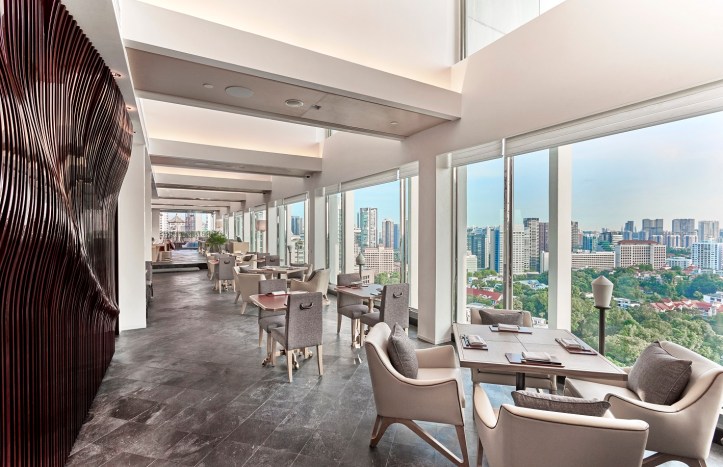
To the Japanese, Dashi is the ‘Broth of Life’. To NAMI Restaurant & Bar, it is an art mastered to perfection by Head Chef Shigeo Akiba. For ten years, Chef Akiba trained under Dashi Master Masami Honda from Nadaman, Yokohama, and became a Master in his own right.
THE GLORY OF DASHI
Dashi’s history stretches back to the Jomon Period of 16,000 – 3,000 years ago. As the ‘backbone’ of Japanese cuisine, dashi formed the basis of many Japanese dishes and was a versatile catalyst to enhancing and enlivening flavours. In fact, dashi was considered as important to cooking as good knife skills were to sushi and sashimi.
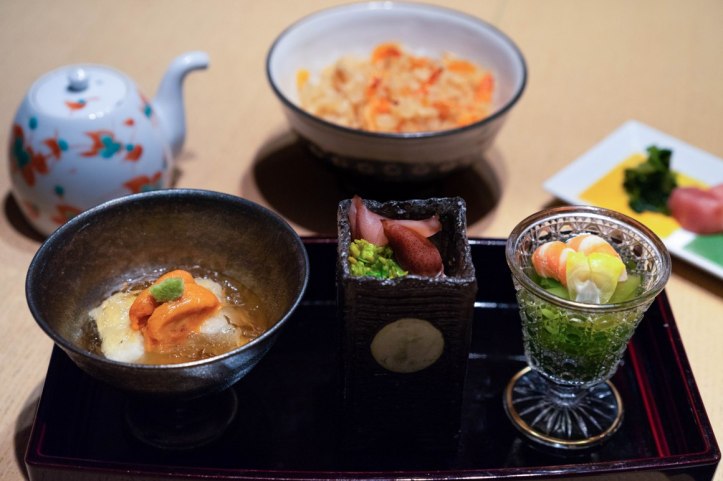
Dashi Appetisers
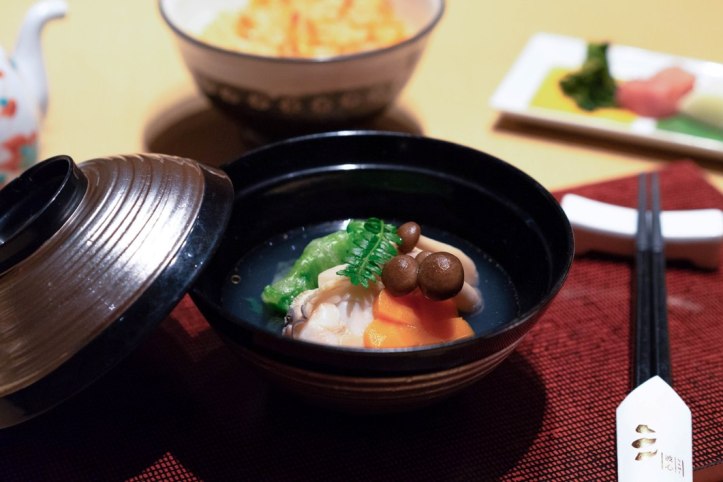
Dashi Soup with Ham aguri clam
Dashi is best savoured through ‘gokan’ or the use of all five senses when dining. The preparation of Dashi requires a palate honed to a degree that allows one to perfectly control, harmonise, balance, and layer nuances of flavor.
Chef Akiba makes his dashi in the traditional way that was taught to him. It is a complex, meticulous process calling for grinding effort; where highly-informed judgements must be made as to the quality of the seasonal ingredients, and the taste of the ‘kombu’ or kelp and ‘katsuoboshi’ or bonito in each brew of dashi, so as to maintain a consistent flavor profile. These are crucial to the resulting dish or sauce.
NAMI and the intricacies of dashi-making
Umami is the characteristic flavor that makes dashi resonate within a dish. Umami is comprised of three acids: Glutamic (found in kombu), Inosinic (found in katsuoboshi) and Disodium Succinic (found in shellfish). Dashi alone commonly uses kombu and katsuobushi, which together lend it a satisfying savouriness and make it a natural flavour enhancer for many dishes.
This protean side of dashi is on full display at NAMI, where up to 8 different types of it are made in-house from natural, seasonal ingredients, beginning with the two base broths- Ichiban Dashi or ‘The First Brew‘, only used in clear soups; and Niban Dashi or ‘The Second Brew‘, often used for chawanmushi or steamed egg custard, or as the base for other dashis with added ingredients.

Savoury custard with udon
Ichiban Dashi starts with the soaking of kombu in water overnight. The kombu is removed the following day and the liquid simmered with a new batch of kombu. The duration of simmer depends on the taste, aroma and colour required; when that is reached, the kombu is removed. Premium bonito shavings are then added to steep momentarily without mixing, this helps maintain the clarity of the liquid, which is then strained to yield a clear broth.
Niban Dashi is made by adding water to the ingredients that were strained from Ichiban Dashi. Also added to the mix are bonito shavings with ‘chi ai’ or ‘bloodlines‘ – strips of dark, blood-rich muscles that run down the spine area of the fish. The broth is left to boil, then strained.
NAMI prepares several other dashis to add nuances to the Ichiban and Niban dashis. This includes Jako Dashi, made from dried baby sardines, yielding a strong aroma and distinct flavor, and used in miso soup. There’s also Urume Dashi, made from dried sardines, with strong savouriness and used in udon dipping sauce; Saba Dashi, made from dried mackerel, is used in soba dipping broth; and Ago Dashi, made from dried flying fish, with a simple yet sophisticated taste and used in Fukuoka-style hot pot broth. Vegetarian diners are not forgotten as a high-quality Kombu Dashi awaits them.
Appreciating dashi at NAMI
To dispel the esoteric image of dashi making and heighten the dining experience, NAMI introduces a new Dashi Appreciation Class ($118++ per person) starting 5th June 2018. The monthly appreciation class, on every last Saturday morning from 10:30 am to 11:30 am, explores in-depth the craft and appreciation of dashi; includes a tasting of the various kinds of dashi available on the market and at NAMI Restaurant & Bar, allowing a comparison of tastes, aromas and colours. The class ends with an exquisite 4-course set lunch.
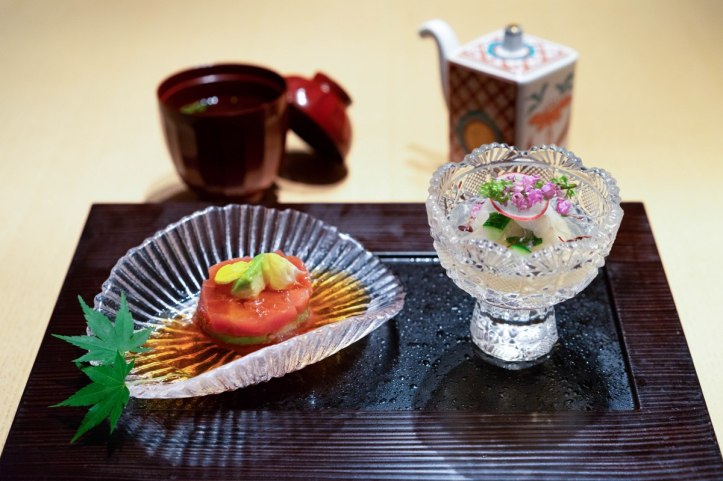
Seasonal Dashi Sashimi with two sauces
But beyond the timeless rituals of dashi making, the essence of the dashi experience lies in the taste. NAMI unveils a specially crafted Dashi Menu ($180++ per person), available for dinner only, comprising a medley of small appetisers followed by Hamaguri clam soup with chicken, Seasonal sashimi served with two sauces, Savoury custard with udon noodles, crab, shiitake mushrooms, Mitsuba leaves with thick sauce, Miyazaki beef loin, Dashi- flavoured rice with miso Soup, and dessert, Fruit cocktail with plum vinegar jelly stock.
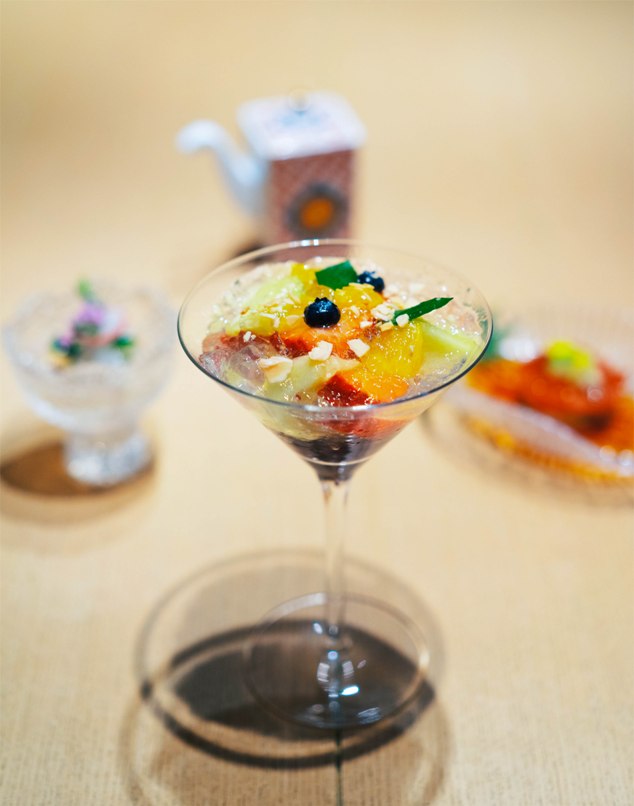
Dashi_Dessert
Or you may wish to indulge in signatures that have already become perennial favourites at NAMI, such as Pan-fried tuna head with Chef Akiba’s sweet soy sauce, and Japanese Saga wagyu beef sirloin A4, sea urchin, rice, Chef Akiba’s special sauce and seasonal truffles. Produce featured in these dishes will change with the seasons to celebrate the best harvests.
Dashi is NAMI
The art of dashi is as old as Japanese culture itself, and NAMI pays homage to this fact. Nami is Japanese for wave — the pulse of the sea — acknowledging that at the heart of the sea is kelp and seafood, the main ingredients of dashi. In its dedication to this ancient wellspring of flavor — through Dashi Master Chef Shigeo Akiba — NAMI has given the timeless art of dashi a champion and a true home.
CHEF SHIGEO AKIBA
Head Chef of NAMI Restaurant & Bar
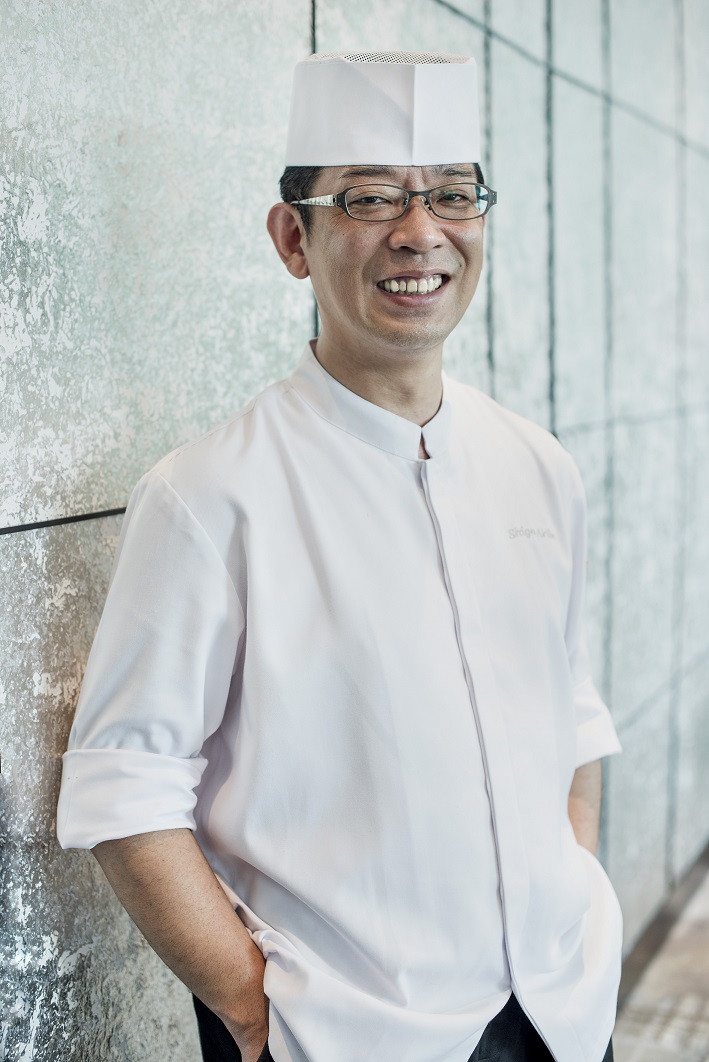
The cornerstone of NAMI Restaurant & Bar is Head Chef Shigeo Akiba, who hails from the Japanese city of Yokohama. As a professional with more than 30 years of experience, including ten under Dashi Master Masami Honda, Chef Akiba is an artist, epicurean, and a true master of dashi – the ‘Broth of Life.’ The art of dashi-making has cultivated in Chef Akiba a focus on the primacy of ingredient and a devotion to tested tradition. It has also developed in him a honed palate of precision and subtlety.
For five years, Chef Akiba worked under Iron Chef Koumei Nakamura as his executive chef, managing the menus of all five restaurants owned by Nakamura, as well as developing the recipes for the dishes that the celebrity chef presented on the internationally popular cooking show on Fuji Television.
Chef Akiba prepared the wedding banquet of Japan’s Prince Akishinomiya and Princess Kiko, and later, their coronation ceremony. He also had the honour of serving Emperor Akihito when the monarch dined at the Nadaman restaurant in Tokyo.
Other notable personalities Chef Akiba has cooked for include Japan’s Princess Takamado Hisako, French movie star Sophie Marceau, Japanese-Chinese baseball legend Sadaharu Oh or Wang Chen-Chih, and world-renowned Japanese symphony orchestra conductor Seiji Ozawa.
Today, Chef Akiba’s work marks the culmination of decades of arduous training and cooking at the highest levels. It is a body of knowledge and experience he uses to delight and astonish his guests at NAMI.
NAMI unveils a specially crafted Dashi Menu ($180++ per person)
Dashi Menu
Appetiser
Sea Urchin on Yam Tofu with Bonito Jelly
Baby Squid with Gochujang Cream Sauce
Shrimp with Hosta Grass
Soup
Hamaguri Clam with Chicken Ball, Lettuce,
Eggplant, Shimeji Mushrooms, Carrot
Sashimi
Tuna and Seasonal Flounder with two sauces
Steamed Dish
Savoury Custard with Udon noodles, Crab, Shiitake Mushrooms, Mitsuba Leaves with thick sauce
Meat Dish
Miyazaki Beef, Eggplant with Kuzu (starch) Sauce
Rice
Dashi-flavoured Rice, Miso Soup and Pickles
Dessert
Fruit cocktail – Melon, Strawberry, Orange, Blueberry with
Red Bean Paste and Plum Vinegar Jelly Stock
Priced at $180++ per person
Price is subject to 10% service charge and 7% GST
Address:
Level 24, Tower Wing,
Shangri-La Hotel, Singapore
22 Orange Grove Road, Singapore 258350
Reservations:
Tel: (65) 6213 4398
Email: dining.sls@shangri-la.com
Opening Hours:
Lunch:
12noon – 2:30pm (restaurant and terrace) Dinner:
6pm – 10:30pm (restaurant)
6pm – 12 midnight (terrace)
Seating Capacity:
Indoor: 96 guests with two private rooms for 6 and 10 guests respectively
 LUXURY ASIA, PREMIUM TRAVEL, LIFESTYLE, TECH, WINE & DINE MAGAZINE