
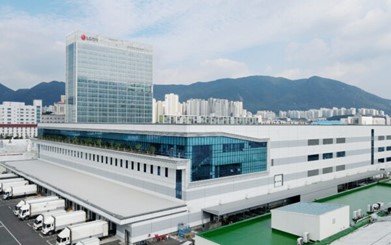
LG Smart Park in Changwon, South Korea, is a futuristic hub of home appliance manufacturing. Named a Lighthouse Factory by the World Economic Forum (WEF) in 2022, LG Smart Park is the result of a massive digital transformation project in 2017.
The innovations implemented at LG Smart Park include a three-dimensional logistics system and edge computing-based analytics that can accurately predict product/component defects in advance. The state-of-the-art facility enhances manufacturing efficiency and gives LG the flexibility needed to proactively respond to shifts in customer demand.
Lighthouse Factory
A Lighthouse Factory is a manufacturing facility that shines a bright light on the future of manufacturing through the use of the Internet of Things (IoT), big data, artificial intelligence (AI), robots and other Fourth Industrial Revolution (4IR) technologies. The WEF announced the first lighthouse factories in 2018, and selects new factories to add to its global network twice each year. LG Smart Park in Changwon, South Korea, and the LG Tennessee factory in the United States were named lighthouse factories in 2022 and 2023, respectively.
- LG Smart Park
LG Smart Park can produce up to 58 different home appliance models on a single production line. Equipped with ‘Digital Twin’ technology (the heart of any smart factory) and autonomous robots, the facility delivers unprecedented production flexibility and impressive gains in manufacturing efficiency.
Optimized Production Logistics with ‘Digital Twin’ Technology
‘Digital Twin’ technology recreates the production environment in virtual reality, allowing for the real-time simulation of various scenarios and making it possible for factory staff to preemptively address issues. Digital Twin analyzes data every 30 seconds, and accurately predicts and notifies workers of any potential problems (such as a materials shortage on the production line) likely to occur within the next 10 minutes. These capabilities help to ensure the dependable and timely supply of parts. The implementation of Digital Twin has reduced defective-product returns by 70 percent (from 2020 to 2021) while also strengthening overall quality competitiveness and production efficiency.
Automated Three-dimensional Logistics System
LG Smart Park’s three-dimensional logistic system outperforms the conventional logistic system previously employed at the Changwon plant by optimizing the use of factory space. From floors one to three, LG Smart Park operates an overhead conveyor system for the swift transport of refrigerator parts to production lines. Intelligent warehouses located within the factory monitor inventory in real-time, automating and streamlining materials management. Simultaneously, Automated Guided Vehicles (AGVs) with 5G network connectivity efficiently transport materials to wherever they are required on the factory floor. The AGVs can handle loads weighing up to 600kg(1322.7lbs) while the overhead conveyers can accommodate boxes of parts/components weighing up to 30kg(66.1lbs).
This innovative system utilizes 30 percent less warehouse space than a ‘traditional’ logistics setup and shortens the time required for hourly materials transportation by 25 percent. Moreover, it significantly decreases the amount of production time lost due to unexpected equipment failures, reducing such ‘interruptions’ by a remarkable 96 percent.
Advanced Analytics System based on Edge Computing Technology and Machine Learning
Equipped with an advanced AI platform, the Plug-in for Intelligent Equipment (PIE) system executes ‘predictive maintenance’ on factory facilities. Leveraging real-time monitoring and deep learning-based data analysis, LG’s PIE has reduced material loss during the vacuum-forming process by as much as 80 percent.
The integrated production building at LG Smart Park collects about 500GB of data per day. LG has installed sensors throughout the factory which collect data during the production process. The amount of data collected on the refrigerator production line each day is now approximately 10,000 times that of the previous daily average of 50MB.
Product defects and equipment failures at LG Smart Park are prevented through the real-time analysis of the large volume of data collected on site. In the past, personnel had to manually check products for abnormalities or issues, find out which piece of equipment caused the problem, and then figure out how to repair it. With LG Smart Park’s intelligent system in place, the time needed to identify the cause of a product defect has been decreased by 50 percent, and the product-defect rate has been cut by around 30 percent.
Additionally, the MAVIN Cloud, a Machine-learning based Vision Inspection system, enhances quality control, and speeds up inspections to save time and ensure that every product made at the factory meets LG’s rigorous standards. LG’s in-house-developed AI platforms, which don’t require a high level of AI expertise to operate, have made the work of production technicians at LG Smart Park much easier.
Safer, Faster Production through Intelligent Automation
On the production line, robotic arms effortlessly lift and attach large refrigerator doors weighing over 20kg(44lbs) to the main body of various LG refrigerator models. The robotic arms perform demanding and repetitive tasks, such as welding and fastening screws, with remarkable speed and consistency. Using 3D vision recognition technology, the robots can undertake tasks that require a high degree of precision, such as the refrigerator door attachment-process.
As a result of the robots’ wide range of capabilities, workers at LG Smart Park can concentrate more on product completion and enhancing product quality, which can be achieved through the less physically-taxing jobs of monitoring and controlling the production line, or overseeing the robots’ operation.
Expansion of LG Smart Park
LG is currently constructing LG Smart Park 2 next to the original LG Smart Park. The new site covers 420,000 square-meters(0.1621 square-miles), making it significantly larger than LG Smart Park, which spans an area of 256,000 square-meters(0.0988 square-miles). Scheduled for completion in 2025, LG Smart Park 2 will feature refrigerator, oven and dishwasher production lines, all leveraging the latest manufacturing innovations to maximize production efficiency and product quality.
- LG Tennessee Factory
Completed at the end of 2018, LG’s world-class autonomous factory in Montgomery County, Tennessee, boasts a floor area of 94,000 square-meters (0.03629 square-miles) and is situated on vast tract of land spanning 1.25 million square-meters(0.4826 square-miles). Utilizing advanced digital technologies, including AI, big data, and robots, the facility operates three production lines for front-load and top-load washing machines, and dryers. The factory has an annual production capacity of 1.2 million washers and 600,000 dryers, while its location within the US enables LG to better respond to changes in local (North American) demand. Employing over 900 individuals, LG’s cutting-edge home appliance factory also plays a significant role in the region’s manufacturing landscape.
Smart Factory Business
Capitalizing on its expertise in constructing and operating intelligent autonomous factories, LG is entering the global smart factory market – a strategic move that will further expand the company’s diverse B2B business portfolio.
Earlier this year, LG established the smart factory business division within its Production engineering Research Institute (PRI) and has initiated the commercialization of its smart factory construction technology and operational solutions.
LG’s smart factory business not only delivers production automation solutions but also incorporates AI-driven production planning, operations, and the Digital Twin solution. The company aims to enhance customers’ manufacturing competitiveness by offering optimal solutions across all stages, from factory planning and design to construction and operation, while also providing continuous improvement consulting services for factory upgrades.
 LUXURY ASIA, PREMIUM TRAVEL, LIFESTYLE, TECH, WINE & DINE MAGAZINE